
Dopamine detox for your phone: a realistic guide
“Dopamine detox” sounds like flushing a chemical out of your brain over a weekend. That's not what it is. It's something more boring and more useful: changing your surroundings so the things that hook you cost a bit more, and the things you care about cost a bit less.
What it is (and isn't)
The idea took off in 2019 with clinical psychologist Cameron Sepah's “dopamine fasting”, and he was clear that the name is a metaphor: it isn't about lowering dopamine, which your body needs, but about reducing the triggers behind impulsive habits, using cognitive behavioural techniques such as stimulus control.
So no, you don't need to spend a day in the dark talking to no one. And no, it isn't a medical treatment. If your phone use is genuinely affecting your sleep, work or mood, talk to a professional.
Why short video is so hooking
- Unpredictable reward. You don't know whether the next video will be good, so you swipe “just one more”. It's the same mechanism that makes slot machines compelling.
- No stopping points. An episode ends; a feed doesn't. There's no natural moment to put the phone down.
- Zero cost to start. One tap and you're in. The easier it is to start, the less you ask whether you want to.
- A tailor-made algorithm. The feed learns what keeps you there and serves more of it.
A 7-day plan (that doesn't rely on willpower)
- Day 1 — Measure. Check Digital Wellbeing for time spent and opens on your three most-used apps. Don't change anything yet.
- Day 2 — Pick the enemy. Is it the whole app or one section? It's nearly always a section: Shorts, Reels, Status, TikTok.
- Day 3 — Cut what you don't need. Block that section and keep the rest. YouTube without Shorts is still useful; Instagram without Reels is still your friends.
- Day 4 — Add friction. For the apps you open on autopilot, add a few seconds of pause or breathing before they open.
- Day 5 — Protect two time slots. Say, the first hour of the day and the last. A blocking schedule, and the phone out of the bedroom.
- Day 6 — Replace. Keep something at hand for idle moments: a book in your bag, a podcast, a list of quick to-dos.
- Day 7 — Review. Compare with day 1. Loosen what's too strict and tighten what didn't work. The goal is a system you can keep for months, not one heroic week.
How 0Dopamine helps at each step
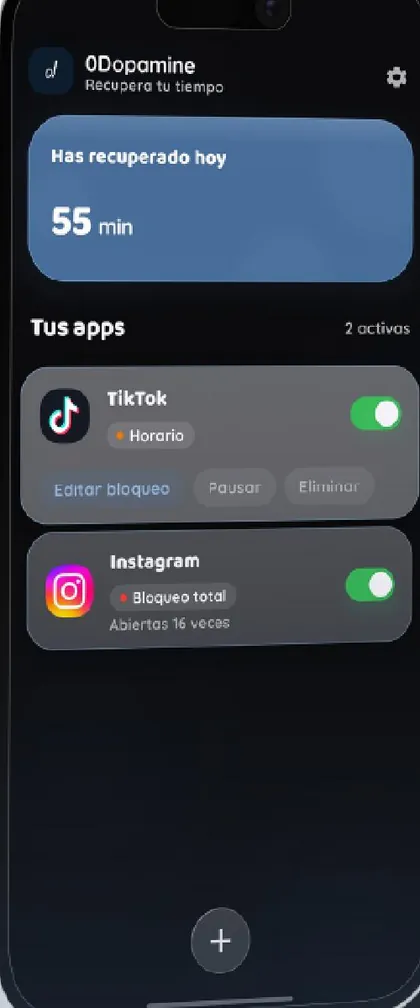
0Dopamine is built for exactly days 3, 4 and 5: it blocks Shorts, Reels and Status without blocking the whole app (with Premium); adds a pause or 4-7-8 breath before the apps you choose open; and supports schedules and daily limits per app. The home screen shows the time you've won back each day.

Free for one app · we never sell your data
Common mistakes
- Deleting every app at once. It lasts two days and you come back hungrier. Better to remove the hooking part and keep the useful one.
- Relying on prompts you dismiss with one tap. A warning you swipe away without thinking isn't a brake.
- Running on guilt. Your phone isn't the enemy. The point is that you decide when you use it.